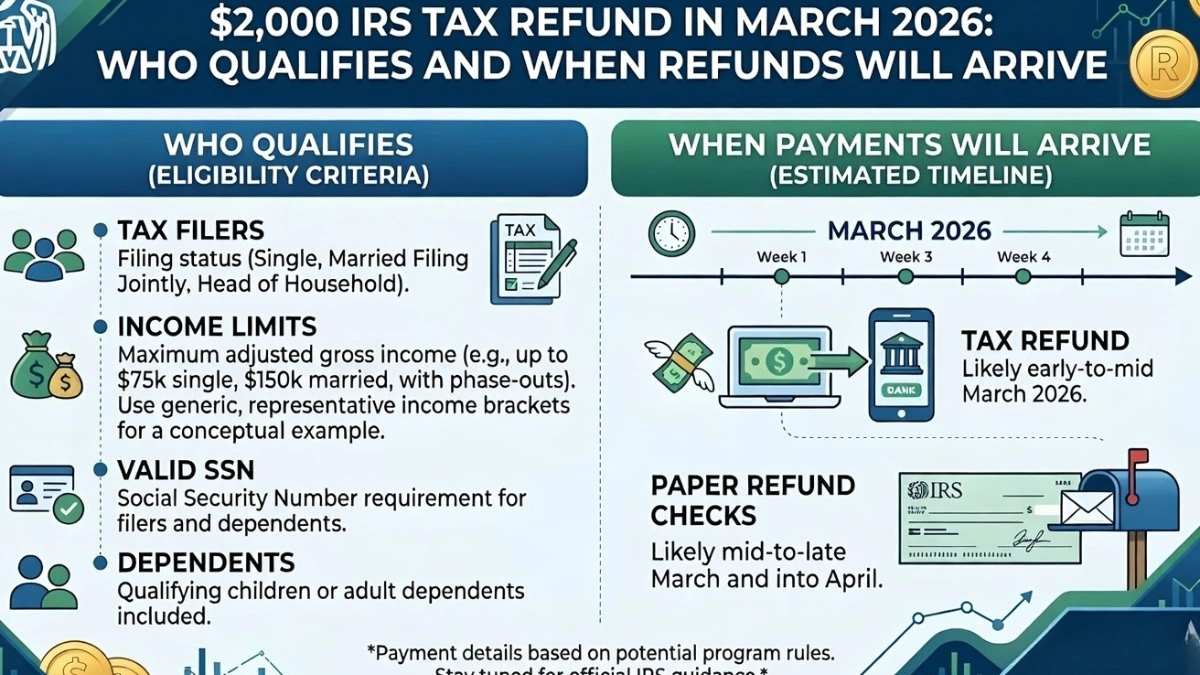
Millions of Americans are closely watching updates around the reported $2,000 IRS direct deposit for March 2026. With rising living costs and continued economic pressure, any financial relief from the government becomes a major talking point. The buzz around this payment has created both excitement and confusion, leaving many people wondering whether they qualify, when the money will arrive, and how to ensure they don’t miss out. While discussions around stimulus-style payments continue, it is important to clearly understand what this $2,000 deposit actually represents and whether it is an official IRS payment, a tax-related refund, or part of an existing federal benefit program.
What Is the $2,000 IRS Direct Deposit in March 2026
The $2,000 IRS direct deposit being discussed is not a universally confirmed new stimulus payment for all taxpayers. Instead, in most cases, this amount is linked to tax refunds, credits, or adjustments processed during the 2026 tax filing season. Many taxpayers who file early and qualify for certain credits may receive refunds around this range. Programs like the Earned Income Tax Credit and Child Tax Credit often result in substantial refunds, especially for families. When combined with standard refunds, the total can reach or exceed $2,000, which is why this figure is trending widely.
Who Qualifies for the $2,000 Payment
Eligibility depends largely on your tax situation rather than a blanket government payout. Individuals who are most likely to receive payments around $2,000 include those who qualify for refundable tax credits, have overpaid taxes during the year, or are eligible for adjustments or backdated credits.
Low- to moderate-income workers, families with dependent children, and individuals who meet specific income thresholds are more likely to receive higher refunds. Those who consistently file accurate tax returns and claim all eligible credits typically see the biggest benefits.
Key Factors That Determine Eligibility
Several factors influence whether you could receive a $2,000 IRS direct deposit. Your total annual income, filing status, number of dependents, and eligibility for federal tax credits all play a major role. Additionally, whether you opted for direct deposit and filed your taxes early can affect how quickly you receive your refund. Taxpayers who have incomplete filings, errors in documentation, or pending verification issues may experience delays or reduced payments.
Expected Payment Timeline for March 2026
For those who have already filed their 2025 tax returns early in 2026, the IRS typically processes refunds within 10 to 21 days. This means many taxpayers could see their direct deposits arriving throughout March 2026. However, if your return includes credits like the Earned Income Tax Credit or Additional Child Tax Credit, processing may take slightly longer due to verification rules. In such cases, refunds are often released in mid-to-late March.
How Payments Will Be Sent
Most eligible taxpayers will receive their payments via direct deposit if they selected this option while filing their tax return. Direct deposit is the fastest and most secure method, ensuring funds reach your bank account quickly.
Those who did not choose direct deposit may receive a paper check or prepaid debit card, which can take additional time to arrive.
Common Reasons for Delays
Even if you qualify, several issues can delay your payment. Errors in your tax return, incorrect bank details, identity verification checks, or IRS backlog can all impact processing time. It is important to double-check all submitted information and track your refund status through official IRS tools to stay updated.
How to Maximize Your Refund
To increase your chances of receiving a higher refund amount, ensure that you claim all eligible tax credits and deductions. Filing early, choosing direct deposit, and keeping accurate financial records can significantly improve your refund experience. Working with a tax professional or using reliable tax software can also help you avoid mistakes and maximize your benefits.
Important Clarification About Stimulus Payments
As of now, there is no officially announced universal $2,000 stimulus payment for March 2026. Any payment around this amount is most likely tied to individual tax refunds or specific benefit programs rather than a new nationwide relief package. This distinction is important to avoid misinformation and unrealistic expectations.
Conclusion
The $2,000 IRS direct deposit trending in March 2026 is not a guaranteed payment for everyone, but many taxpayers could receive similar amounts through refunds and credits. Understanding your eligibility, filing your taxes correctly, and choosing direct deposit are key steps to ensuring you receive your money on time.
Staying informed and proactive can help you take full advantage of available financial benefits during the 2026 tax season.
Disclaimer: This article is based on general tax trends and publicly discussed updates. For official confirmation, always refer to IRS announcements or consult a tax professional.